The Park and the Ditch
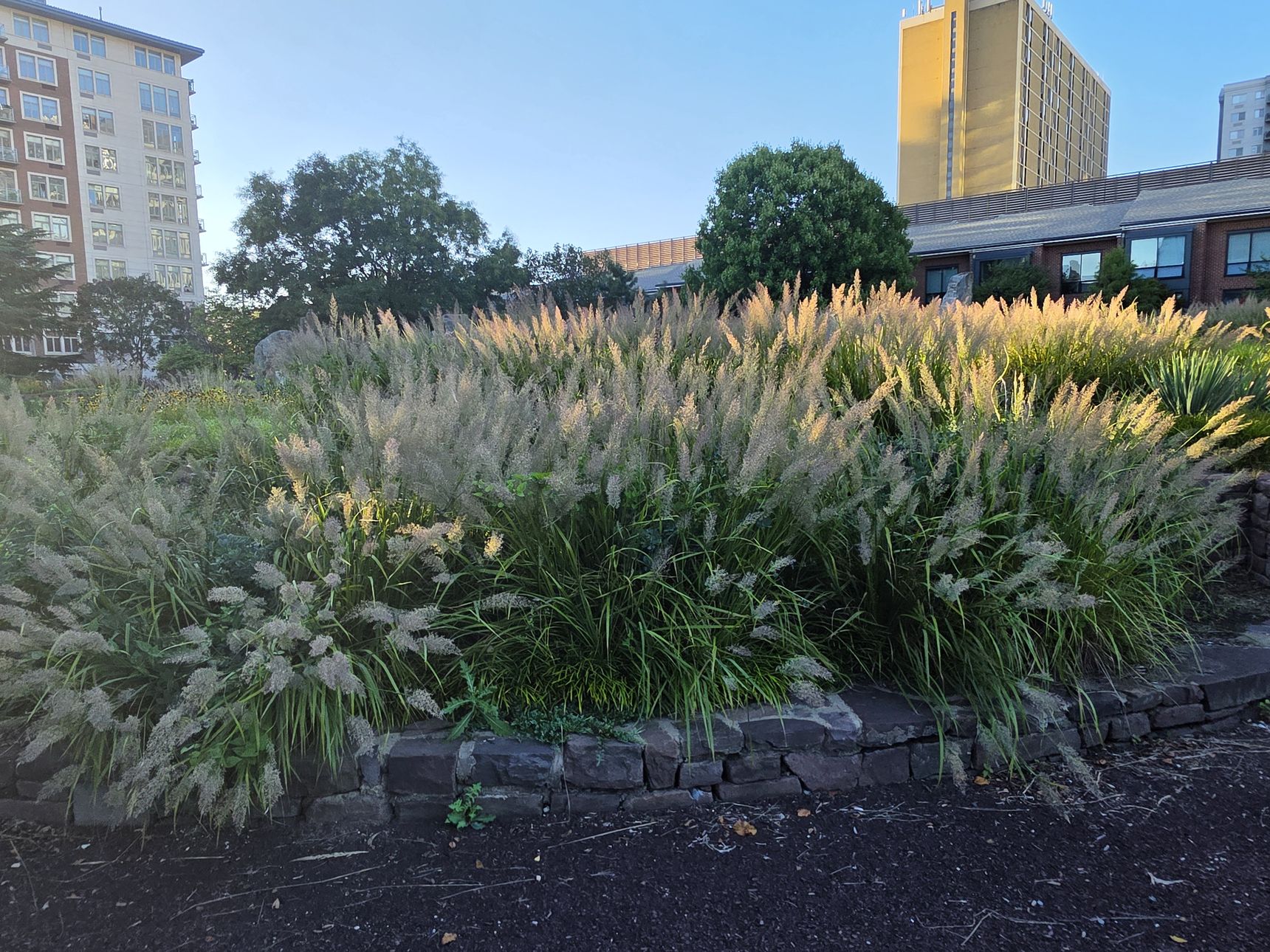
I moved to Philadelphia this summer, and one of my favorite walks is finding the closest park. The closest one I found is called Matthias Baldwin Park. Everything in it is well put. I love the feeling of walking in a park and sensing that someone wanted me to look at this flower, at this plant, at how beautiful it is. There’s a beautiful sense of empathy in that: energy and funds were spent on creating this space, and on me having this experience.
As I left the park I walked a bit down the road and saw a bridge. I didn’t really have a good word for it. It bridged a space below, maybe twenty feet deep, and I couldn’t really see what was down there. When I leaned in, what I mostly saw was so much greenery that it made the park pale in comparison.
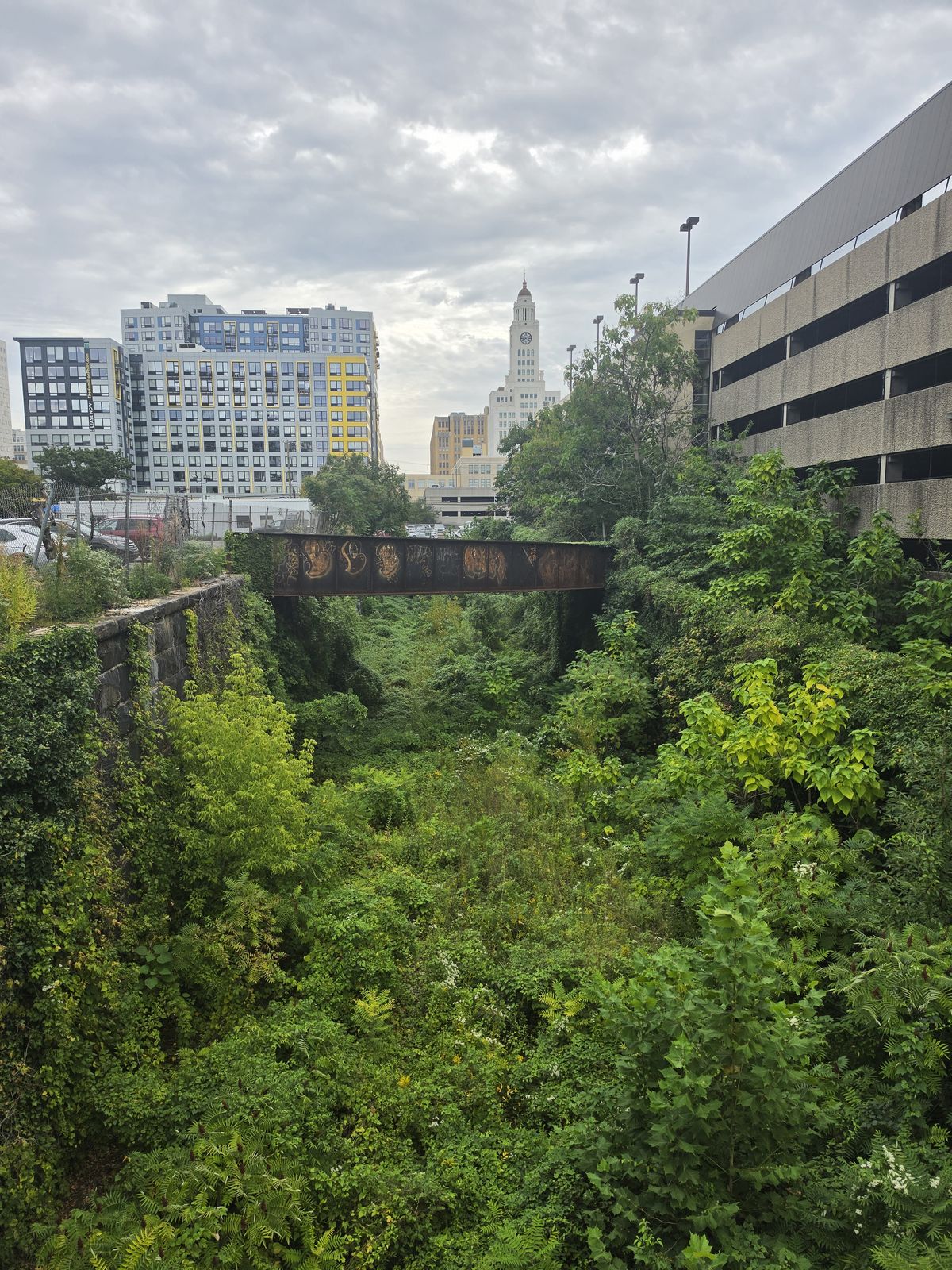
So you lean into this trench, twenty feet deep and almost forty wide, and you start to ask what is growing down there. Who was so kind to just let it grow? It’s odd because it doesn’t look clean, and at the same time it’s the most pristine view of nature I’ve seen in a long time, because it’s nature that survives even where others don’t want it to. It reminded me of COVID: animals walking roads they were never able to walk, plants growing in places they never thought they could grow, because humanity wasn’t there to disturb them. The time where nature had a ballroom.
As I look down, I see a very tall tree with beautiful purple trumpet flowers. A paulownia, and I know that name only because my mom mentioned that plant once and I thought of Paulo Dybala and Paulo Freire. That would be an interesting gathering. As I lean into the rail, I see beams that look like something out of an English factory in the nineteenth century, holding up a bridge, dark brown with copper aging, and a green that envelops it like watercolor. A railing completely corroded, mostly broken, but covered in green with hints of red.
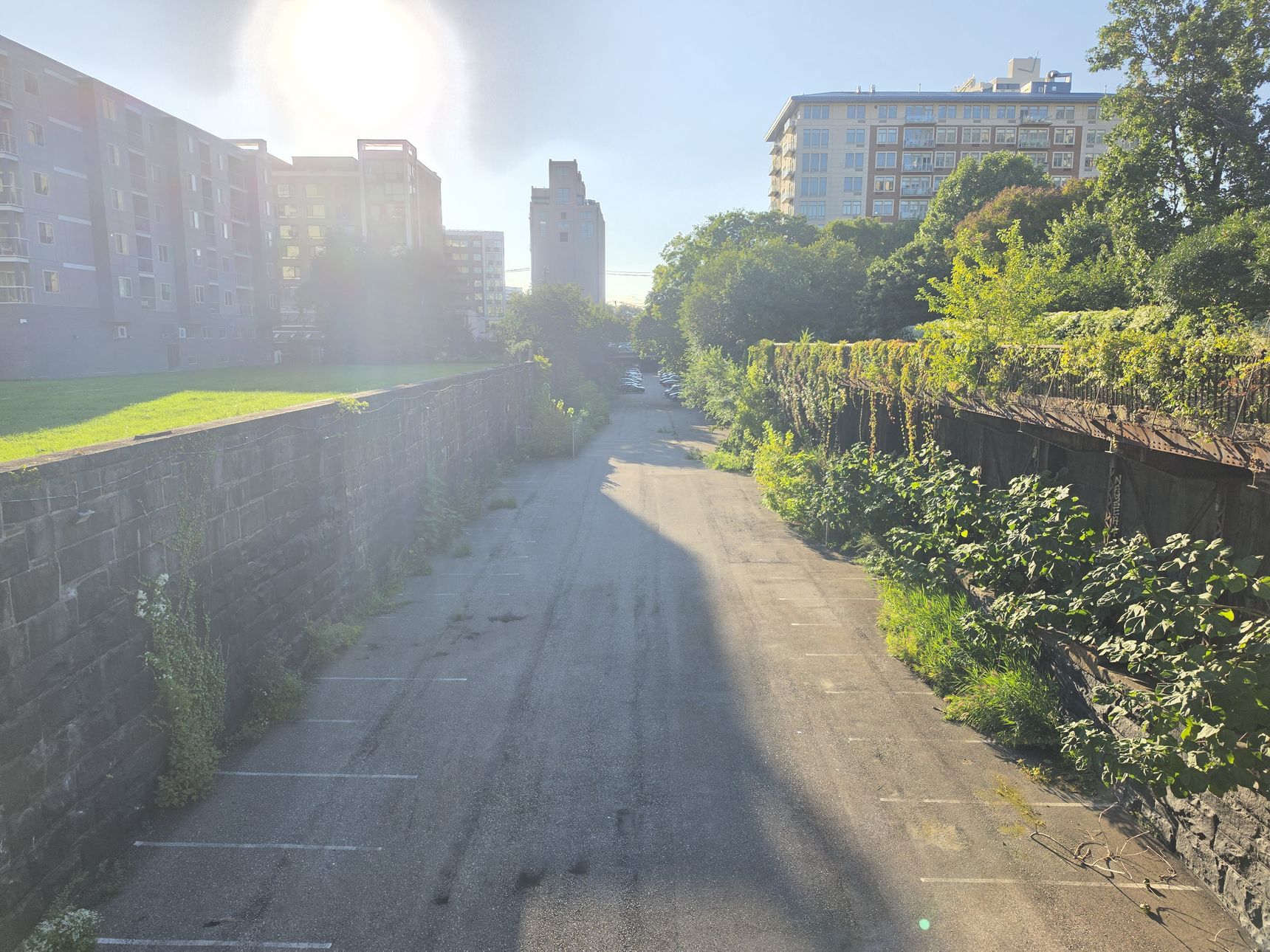
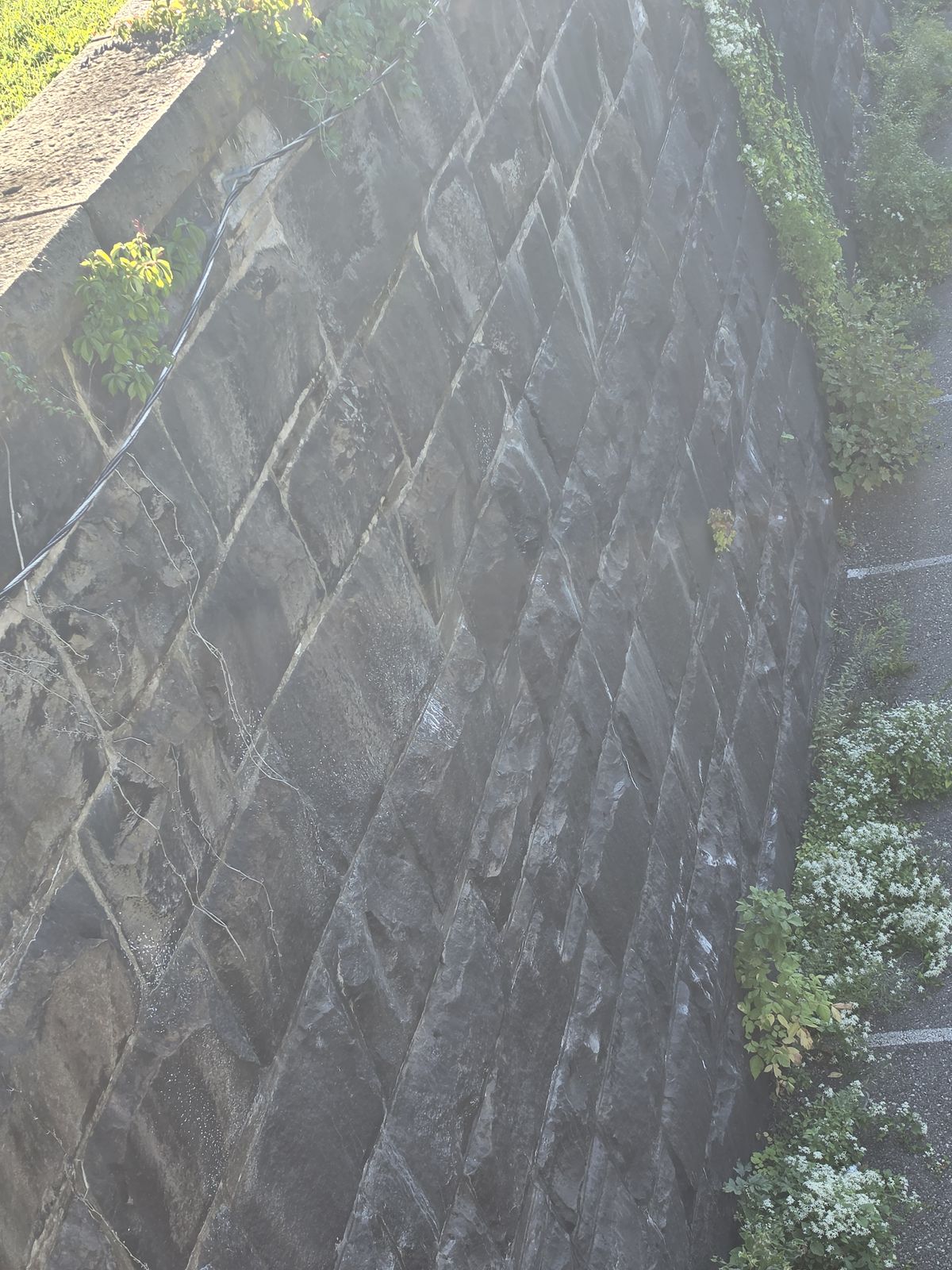
Giant stones, a foot and a half by three feet, that just look like a very old wall. In the bottom, I see asphalt clearly covering a story we can’t see.
I use the word abandoned sparingly, because it doesn’t feel abandoned. It feels embraced. By humanity’s standards this is an abandoned structure, and the proof is the empty parking lot beside it, like a scene out of The Last of Us.
So I wanted to understand what happened.
Who planted this, and why is it there?
Start pulling the thread and I find that in the nineteenth century the big railroad companies ran their trains in the middle of the city of Philadelphia, and the city, reasonably, got tired of trains being in the middle of everything. So the railroads were made to move their lines below the street. When we look down from the bridge, we’re looking at evidence that trains went under here. This is part of the Reading Railroad’s City Branch, a route bought in 1850 to connect Center City to the Schuylkill. It ran at street level for decades until it was cut down.
Right next to these ditches is the park. Matthias Baldwin was one of the titans of the railroad age in Philadelphia. There’s a sign as I enter, from the Pennsylvania Historical and Museum Commission:
Cast marker · 19th Street entrance
Baldwin Locomotive Works
For years the nation's leading locomotive manufacturer, it exported products worldwide. Established here by Matthias Baldwin in 1835, it was an early example of integrated industrial organization, employing more than 15,000 workers. Its 39 buildings encompassed 17 acres and transformed the surrounding area from a rural estate to one of the city's first factory neighborhoods. Relocating to Eddystone in 1928, it ceased production in 1956.
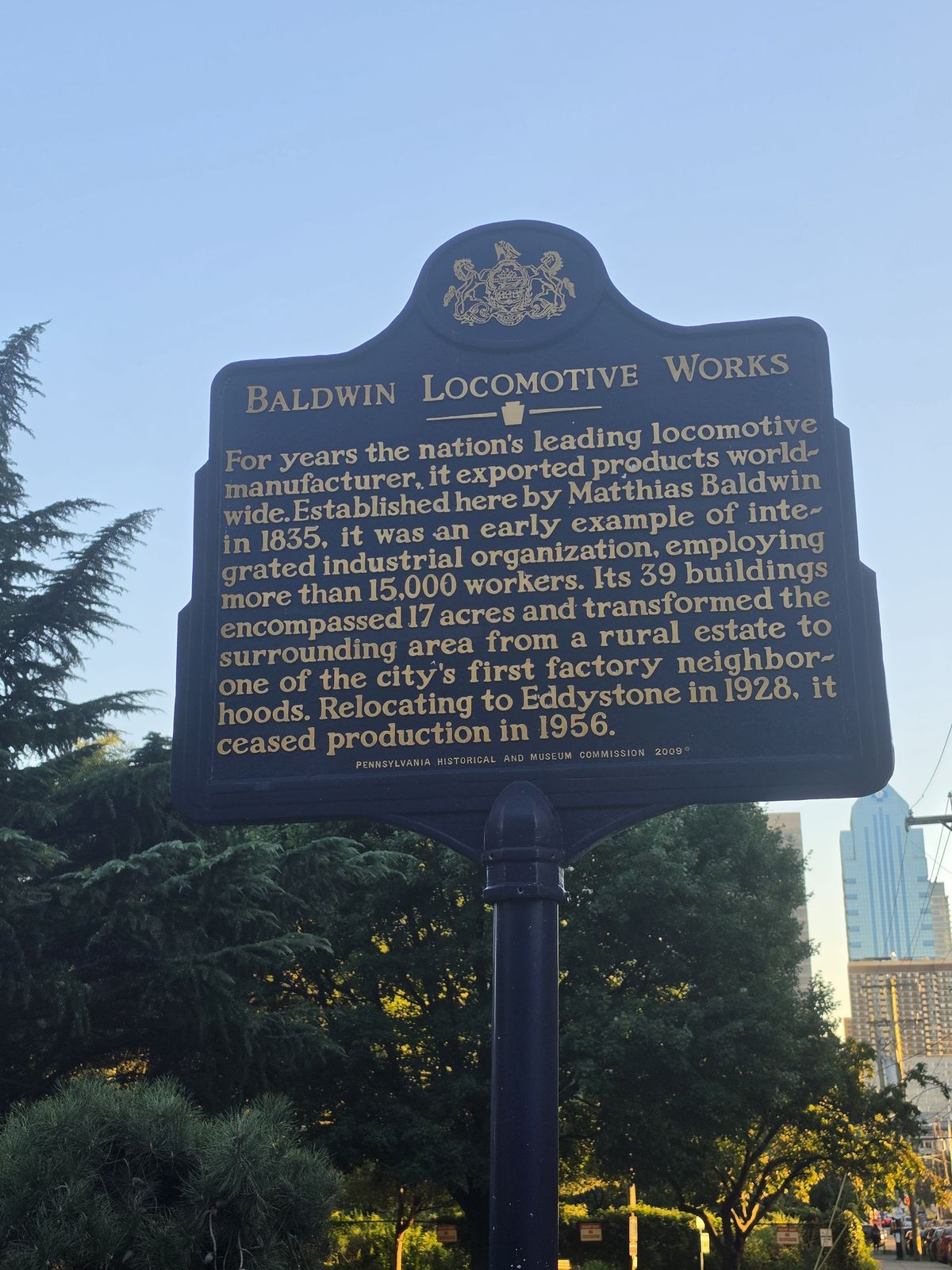
The engines built here ran on the very railroad I’d been looking down at. And if the last freight passed through in the 1990s, then the flora I’m photographing, not the park’s but the ditch’s, is actually relatively young. It’s pretty interesting to think how quickly nature took over this space.
The park is complete order. It’s not a particularly big park, but every tree is clearly labeled. There’s a six-pronged rock structure in the middle, a baby Stonehenge, and plants that feel like a designer tried to recreate corn without ever having seen corn, and flowers with red, and one plant with a beautiful purple that looks like lavender.
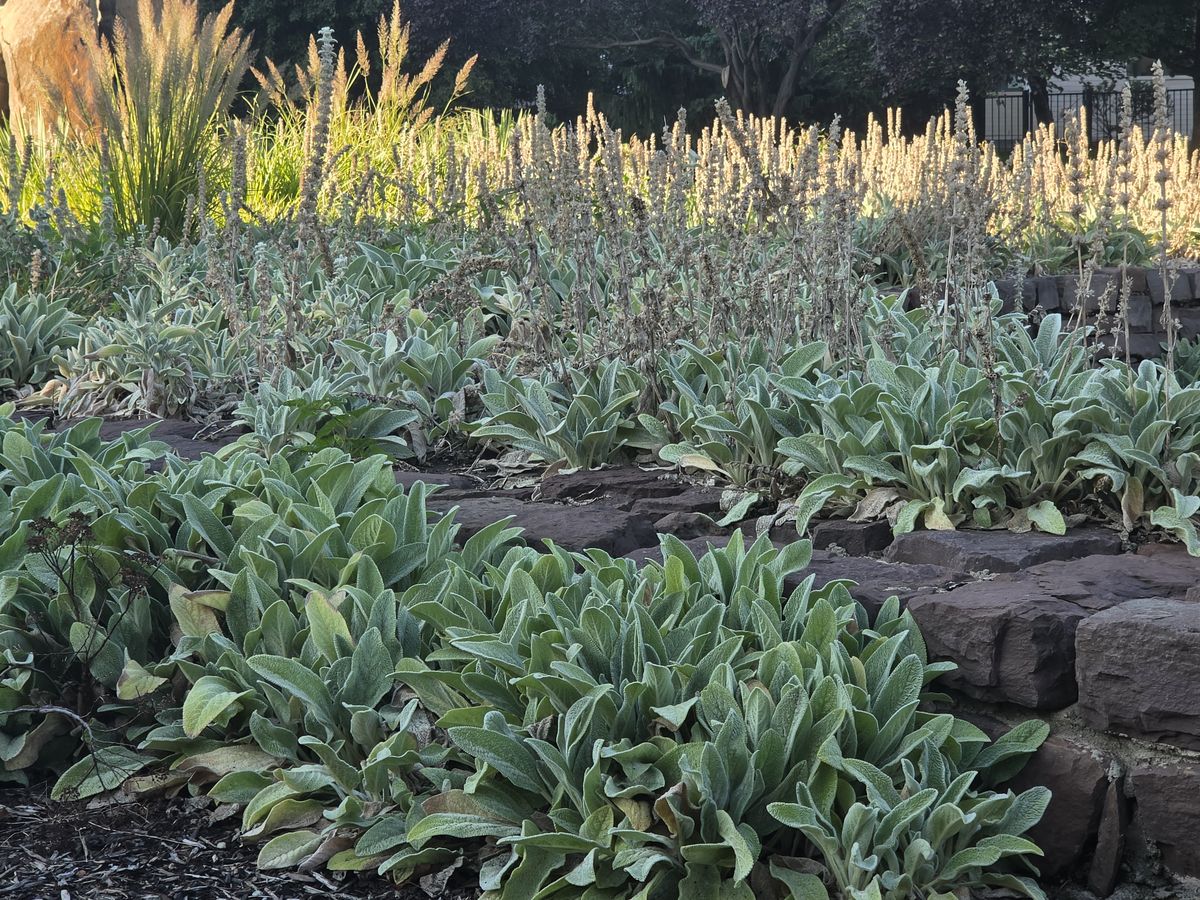
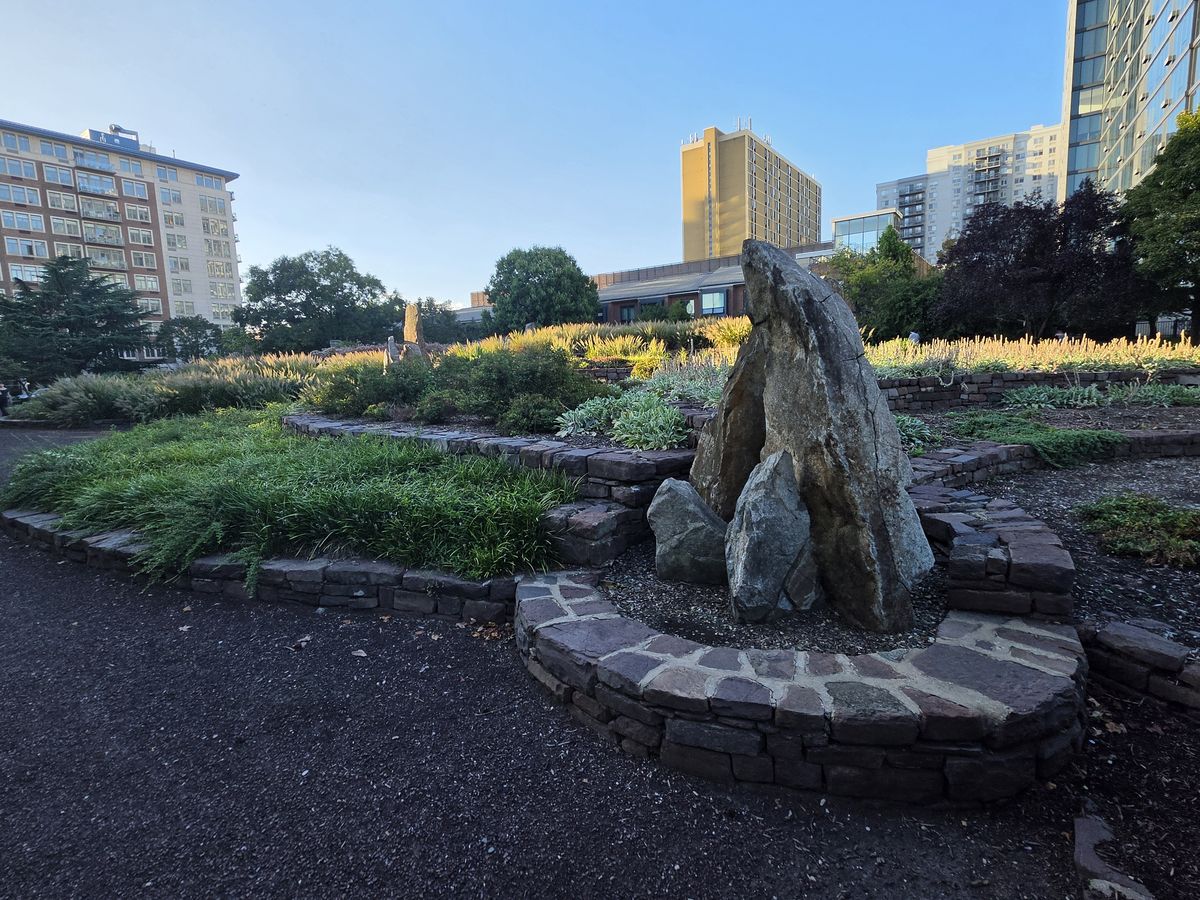
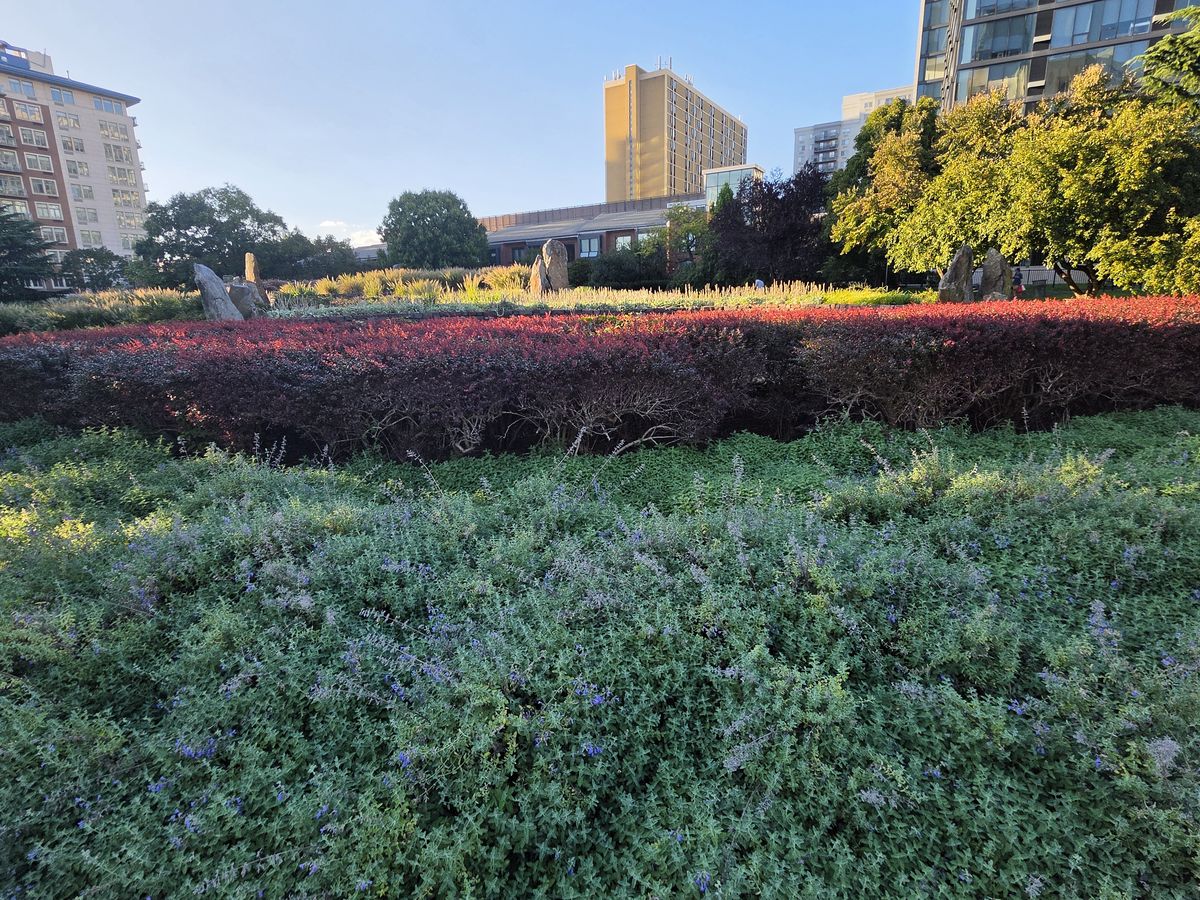
As I walk, I realize this is another picture of what nature can do: nature ordained, controlled by humanity, and expressed in a way that is absolutely beautiful to anyone interested in appreciating the particular placement of the sugar maple as I enter from 19th Street.
So we arrive at the duality of nature here in Philadelphia: a perfectly ordered park named for a titan of industry, right next to a ruined ditch completely covered by nature that truly just wants to grow. For me it reveals a city with old capital, the capital of the railroad days, of the very early days of the American empire, that still survive. And at the same time, structures that are not used anymore, that the city still hasn’t been able to cure. I imagine someone interested in urban planning looks at these spaces in the middle of the city and thinks: imagine what we could do there.
I never thought I would live in Philadelphia. I still feel a bit surprised that I do. But this is a city built for the walker, the way Old San Juan is, and I feel blessed to be walking a place with such deep pockets of history, asking the questions that reveal the ditch from the nature, and the capital that lets the park live right next to undisturbed wilderness.
And being able to appreciate that, once someone creates a ditch and stops using it, nature is going to reclaim it. That’s probably what’s going to happen in the next hundred years. This whole ditch will be completely covered in green, done with the gusto of nature taking back its territory.